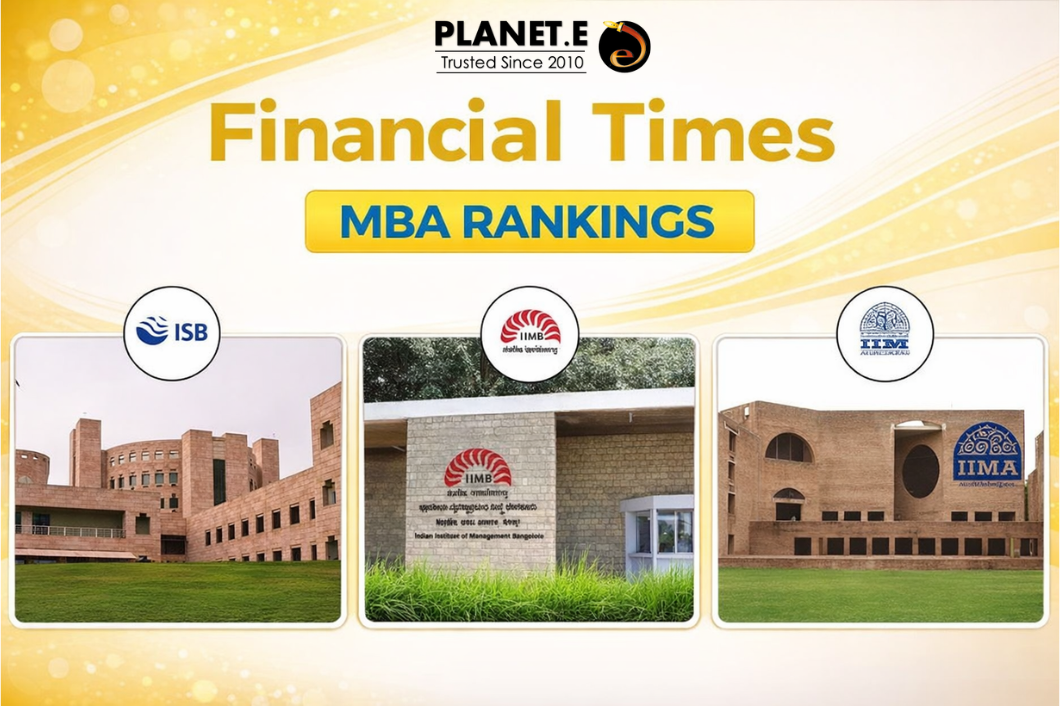
Each year the Financial Times (FT) releases its Global MBA Rankings, widely considered one of the most influential international league tables for business schools. The 2026 edition evaluated 100 full-time MBA programmes around the world. The ranking methodology combines multiple metrics — including salary outcomes, alumni feedback, research strength, diversity, career progress and international mobility — to create a balanced and rigorous picture of programme quality.
Key aspects of the 2026 ranking methodology include:
-
21 criteria covering outcomes and school performance
-
56% weight given to alumni survey responses
-
34% based on school data
-
10% for research output
-
Focus areas like salary increase, value-for-money, diversity, career services and international mobility are central to the final scores.
🌍 Top MBA Programmes Globally (2026)
While Indian institutions have been rising in stature, the overall global MBA ranking is still dominated by established Western business schools. According to the latest list:
| Rank | Business School | Country |
|---|---|---|
| 1 | MIT Sloan School of Management | United States |
| 2 | INSEAD | France |
| 3 | Wharton School (University of Pennsylvania) | United States |
| 4 | IESE Business School | Spain |
| 4 | London Business School | United Kingdom |
| 6 | HEC Paris | France |
| 7 | Esade Business School | Spain |
| 8 | CEIBS (China Europe International Business School) | China |
| 9 | UC Berkeley: Haas | United States |
| 10 | Harvard Business School | United States |
These results reflect broader global momentum trends in business education, with strong representation from Europe and North America. |
🇮🇳 Indian Business Schools in FT MBA Rankings 2026
Indian schools have made significant gains this year — not just by featuring in the top 100, but by rising sharply in global standings. This reflects the growing international recognition of Indian management education.
🏆 Top Indian Performers
Here’s how leading Indian MBAs ranked globally in 2026:
| Institution | Global Rank | Notes |
|---|---|---|
| Indian School of Business (ISB) | 12 | Highest-ranked Indian B-school; up 15 places from 2025. |
| IIM Ahmedabad | 27 | One of India’s oldest and most prestigious management schools. |
| IIM Bangalore | 34 | Strong showing, climbing significantly from last year. |
| IIM Calcutta | 53 | Featured well within top 100. |
| IIM Lucknow | 58 | Continues its upward trajectory. |
| IIM Indore | 62 | Globally recognised with solid outcomes for graduates. |
| IIM Kozhikode | 65 | Climbing steadily in global rankings. |
| SPJIMR Mumbai | 74 | Entered the global list this year. |
| XLRI – Xavier School of Management | 82 | Consistent performer in the top 100. |
👉 Nine Indian business schools feature in the FT 2026 Top 100 — a strong indicator of rising international competitiveness.
🎯 Highlights & What They Mean
📈 ISB: A New High
The Indian School of Business is the standout story — reaching #12 globally, a leap driven by strong salary growth, alumni network strength and career outcomes. This marks a major milestone for Indian MBA programmes and reflects sustained global confidence in ISB’s Post Graduate Programme in Management (PGP).
💼 IIMs Making Waves
The Indian Institutes of Management — traditional powerhouses — continue to solidify their global positioning:
-
IIM Ahmedabad and IIM Bangalore both ranked inside the top 40.
-
IIM Calcutta, IIM Lucknow, IIM Indore and IIM Kozhikode also appeared in the top 100, highlighting the depth and breadth of MBA options in India.
📌 Emerging Indian Schools
Institutes like SPJIMR Mumbai and XLRI Jamshedpur made it into the ranking for 2026, showing that private and newer institutions are gaining global visibility alongside legacy players.
💡 Why These Rankings Matter
FT’s MBA rankings are especially influential because they:
✅ Reflect global outcomes — focusing on salary, career progression and value.
✅ Amplify international brand visibility — aiding placement and global opportunities.
✅ Guide aspirants worldwide — helping students choose where to invest time and money.
For Indian aspirants, this year’s results signal not just pride but serious credibility on the world stage, especially with multiple schools performing strongly across key indicators.
📌 Conclusion: The Rise of Indian MBA Education
From a handful of schools in the FT rankings a decade ago to multiple Indian institutions within the global top 100 today, the 2026 FT MBA rankings reflect a broader shift in global management education. India’s top B-schools are no longer just regional leaders — they are competing shoulder-to-shoulder with global giants.
For future applicants, these rankings are more than numbers — they’re passport points to global careers, influencing recruitment, opportunities and international mobility post-MBA.